Mobile Home Park Investing: The Complete Guide to Building Wealth With Manufactured Housing Communities
Mobile home park investing changed my life. I’m not saying that to be dramatic—it’s just the truth.
When I first got into commercial real estate back in 2020, mobile home parks were the asset class that opened the door for me. Since then, I’ve purchased five mobile home parks, and they’ve become a cornerstone of my portfolio at Kaizen Properties. After interviewing over 600 investors on The Real Estate Investing Club podcast, I can tell you that mobile home parks consistently come up as one of the most underrated—and most profitable—niches in real estate.
In this guide, I’m going to break down everything you need to know about mobile home park investing: why these assets perform so well, how to find and evaluate deals, the financing strategies that work (including how I bought my first two parks with just 10% down), and the operational lessons I’ve learned the hard way.
Let’s get into it.
What Is Mobile Home Park Investing?
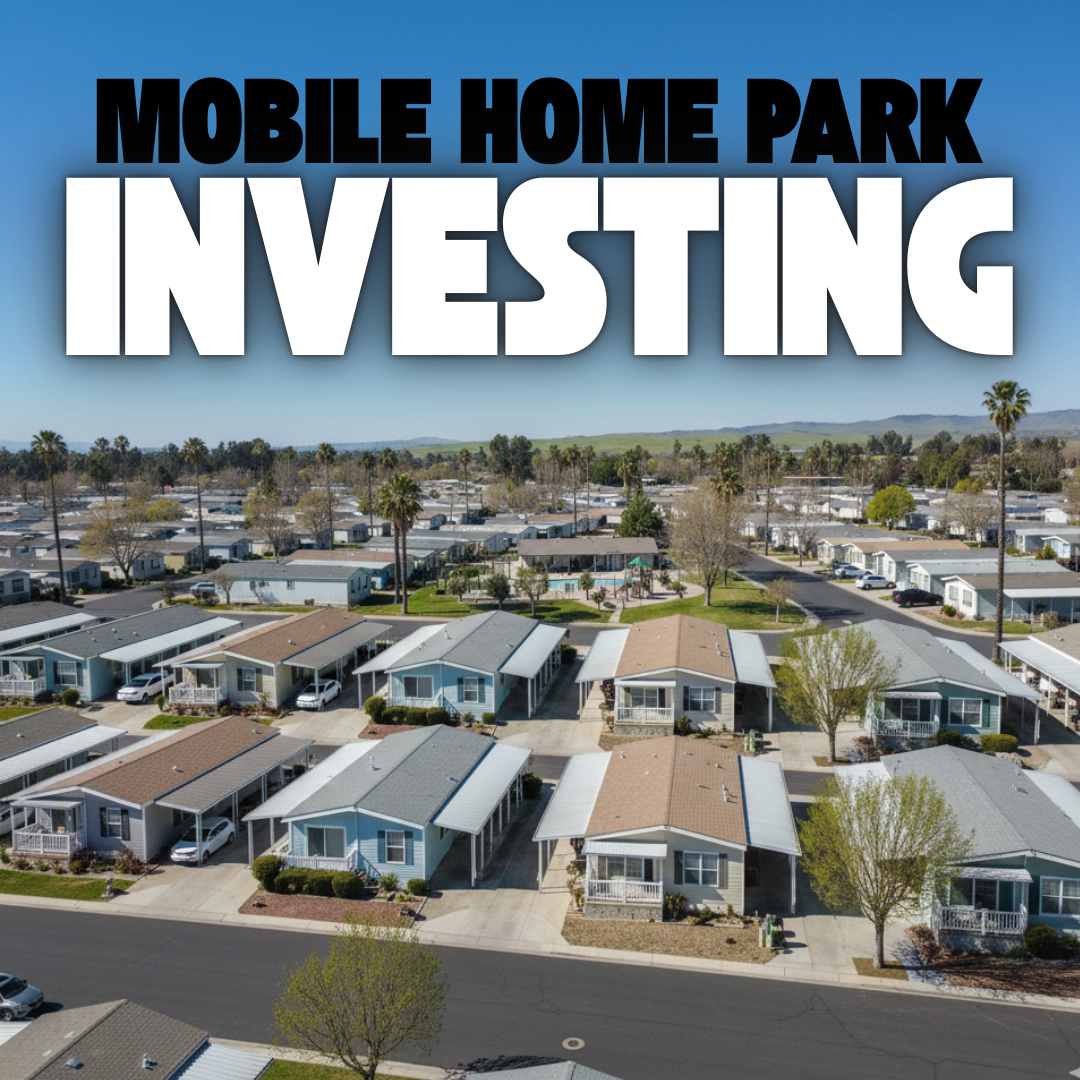
Mobile home park investing—also called manufactured housing community (MHC) investing—involves purchasing land that’s divided into individual lots, which are then rented to tenants who own or rent mobile homes that sit on those lots.
Here’s the key distinction that makes this asset class unique: in most cases, you own the dirt, not the structures. Your tenants own their mobile homes, and they pay you lot rent for the privilege of placing their home on your land.
This is fundamentally different from multifamily investing, where you own the buildings and are responsible for everything—the walls, the plumbing, the appliances, the roofing. With mobile home parks, your responsibility is primarily the infrastructure: the roads, the utilities under the ground, and the common areas.
That distinction is what makes mobile home parks such an attractive investment vehicle for building long-term wealth.
Why Mobile Home Parks Are a Recession-Resistant Asset Class
I’ve had countless conversations with investors about what drew them to mobile home parks, and the answer almost always comes back to one thing: these assets perform well in both up and down markets.
Here’s why mobile home parks are considered recession-resistant:
Affordable Housing Demand Never Goes Away
According to the National Low Income Housing Coalition’s 2025 Gap Report, there’s a shortage of 7.1 million affordable rental homes for extremely low-income households in the United States. The Harvard Joint Center for Housing Studies estimates the overall housing shortage at approximately 1.5 million units.
Mobile homes fill a critical gap in the housing market. The average cost of a new manufactured home in 2024 was approximately $124,300—roughly one-third the cost of a site-built home, which averaged $409,872 according to the Manufactured Housing Institute. For millions of Americans, manufactured housing isn’t just an option—it’s the only realistic path to homeownership.
When the economy contracts and people lose jobs or take pay cuts, demand for affordable housing actually increases. People who might have rented apartments or owned traditional homes often downsize into mobile home parks. This counter-cyclical demand pattern is what makes mobile home parks so stable during recessions.
Tenant Stickiness Creates Predictable Cash Flow
One of my favorite aspects of mobile home park investing is how “sticky” the tenants are. Once someone moves their mobile home into a park, they’re likely to stay for a very long time.
Why? Because moving a mobile home is expensive and logistically complicated. We’re talking $5,000 to $10,000 or more to move a single-wide, and even more for a double-wide. Many homes—especially older ones—simply can’t be moved without significant damage. Some municipalities won’t even permit the relocation of homes over a certain age.
This creates a natural barrier to tenant turnover. Your residents aren’t going to move over a $25 rent increase or a minor dispute with management. They’re invested—literally—in staying put.
According to data from Keel Team, the major mobile home park REITs like Sun Communities maintain occupancy rates above 97%. That’s the kind of stability you rarely see in other real estate asset classes.
Industry Giants Have Validated the Model
If you’re wondering whether mobile home parks are a legitimate investment class, consider who else is betting big on this space.
Warren Buffett, through Berkshire Hathaway, owns Clayton Homes—the largest manufactured home builder in the country. Sam Zell made his first mobile home park investment in 1983 and called it one of the best investments of his career. Today, Equity LifeStyle Properties (which Zell founded) is one of the largest mobile home park operators in the world.
When billionaire investors with decades of experience consistently choose manufactured housing as a core holding, that tells you something about the asset class’s fundamentals.
The Financial Case for Mobile Home Park Investing
Let’s talk numbers, because at the end of the day, this is about building wealth.
Lower Operating Expenses Than Multifamily
One of the biggest advantages of mobile home parks over traditional multifamily is the expense ratio.
In a typical apartment complex, you might see operating expenses consume 50% or more of gross revenue. You’re responsible for maintaining the buildings, replacing appliances, dealing with plumbing issues, painting units between tenants, and handling endless maintenance requests.
With mobile home parks, operating expense ratios typically run between 35% and 40%. In well-managed parks with tenant-owned homes and direct-billed utilities, I’ve seen expense ratios as low as 22-25%. That difference goes straight to your bottom line.
Think about it: no broken toilets, no leaky roofs, no replacing refrigerators. The structural maintenance responsibility falls on the homeowners. Your job is to maintain the infrastructure—the roads, the water and sewer lines, the electrical service to lot pedestals—and keep the common areas presentable.
Attractive Cap Rates and Returns
Cap rates in mobile home parks vary widely depending on quality, location, and market conditions. Here’s how I think about it:
Institutional-grade parks in strong markets (paved roads, city utilities, high occupancy, good demographics): These trade at 5-6% cap rates. You’re paying a premium for stability and low risk.
Value-add parks with upside potential (vacancy to fill, below-market rents, deferred maintenance): These typically trade in the 7-9% cap rate range. This is where I personally like to focus.
Turnaround or distressed parks (significant vacancy, infrastructure issues, management problems): These can trade at 9-12%+ cap rates, but they require significant capital and expertise to stabilize.
When I’m making offers, I typically target an 8-9 cap rate for value-add deals. The market has compressed in recent years, and you’ll see some parks trading at 5-6 caps, but I need to see a clear path to value creation to justify paying those prices.
The Power of Seller Financing
Here’s something that doesn’t get talked about enough: mobile home parks have one of the highest rates of seller financing of any commercial real estate asset class.
Why? Because most mobile home parks are still owned by “mom and pop” operators who purchased their parks decades ago. These sellers often own their properties free and clear, and they’re more interested in monthly income from a seller-financed note than a lump sum that creates a massive tax bill.
My first two mobile home parks were both seller financed with just 10% down. The second park was especially attractive—we negotiated an 11-year amortization at 2.67% interest. That’s the kind of deal that’s almost impossible to find with traditional bank financing.
When you can buy a park at a 10% cap rate with seller financing at 6% interest, your cash-on-cash returns can reach 20-25% or higher. That’s the magic of mobile home park investing.
How to Evaluate a Mobile Home Park Deal
After five acquisitions and hundreds of hours analyzing deals, here’s the framework I use when evaluating mobile home parks.
The Key Metrics You Need to Collect
When I’m talking to a park owner—whether they’ve reached out to me or I’m calling them directly—I’m gathering a specific set of information:
Total number of pads (lots): This tells me the scale of the opportunity. I generally look for parks with at least 20-30 spaces to justify the management overhead, though smaller parks can work if the numbers are right.
Number of occupied pads: Vacancy represents both risk and opportunity. A park at 70% occupancy has upside if you can fill those lots, but you need to understand why they’re vacant.
Tenant-owned homes vs. park-owned homes (TOH vs. POH): This is critical. Tenant-owned homes are the ideal scenario—residents own their homes and pay you lot rent. Park-owned homes mean you’re in the rental business, which comes with higher expenses, more management headaches, and typically lower margins.
I want to know exactly how many of each and factor that into my underwriting. A 50-space park with 40 TOH and 10 POH is a very different proposition than one with 20 TOH and 30 POH.
Current lot rent: What are residents paying per month for their lot? How does this compare to other parks in the area? Is there room to raise rents to market rate?
Utility situation: This is huge. Are the homes on city water and city sewer, or is the park served by a well and septic system?
Why Utilities Matter So Much
Let me be direct: ideally, you want city water and city sewer. Wells and septic systems introduce additional risk, maintenance costs, and regulatory headaches.
That said, I do own a park that’s on well and septic, and it’s been a great investment. It’s not a dealbreaker—but you need to factor in the additional risk and cost when you’re underwriting.
With well systems, you need to worry about water quality testing, pump maintenance and replacement, and capacity constraints. With septic, you’re dealing with regular pump-outs, drain field issues, and potential replacement costs that can run into six figures for larger systems.
If you’re buying a park with well and septic, get thorough inspections, understand the age and condition of the systems, and build significant reserves into your budget.
Another important consideration is utility billing. Are utilities included in lot rent, or are they billed back to residents? Billing back utilities (either directly through sub-metering or through a ratio utility billing system) can significantly improve your NOI and is one of the most common value-add strategies in the space.
Due Diligence Checklist
Beyond the basic metrics, here’s what I dig into during due diligence:
Infrastructure condition: Walk the park. Look at the roads, the drainage, the electrical pedestals, the visible utility connections. Deferred maintenance adds up fast.
Rent roll verification: Don’t just take the seller’s word for it. Verify occupancy and rent payments with bank statements or a third-party rent roll audit.
Market analysis: What are other parks in the area charging for lot rent? What’s the demand for affordable housing? Are there employment centers nearby?
Regulatory environment: Some municipalities are hostile to mobile home parks. Check local zoning, rent control laws (yes, they exist for mobile home parks in some areas), and any pending regulatory changes.
Title and survey: Make sure the seller actually owns what they’re selling and that there are no boundary disputes or encroachments.
How to Find Mobile Home Park Deals
Finding deals is one of the most common questions I get from investors who want to break into this space. Here’s what’s worked for me.
Direct-to-Owner Marketing
Most of my acquisitions have come from direct outreach to park owners. This includes:
Direct mail campaigns: Sending letters to park owners expressing interest in purchasing their property. This is a numbers game—you need to send a lot of letters to generate leads, but when you connect with a motivated seller, the deal terms are often much better than what you’d find on the open market.
Cold calling: Picking up the phone and calling owners directly. I know it’s not glamorous, but it works.
Driving for dollars: When I’m in an area, I’ll drive through mobile home parks and jot down information to follow up later.
Online Marketplaces and Brokers
Loopnet and Crexi: The major commercial real estate listing sites have mobile home park listings, though competition is fierce and pricing is often at or above market.
Mobile Home Park Store: A niche marketplace specifically for mobile home parks.
Specialty brokers: There are brokers who focus specifically on manufactured housing communities. Building relationships with these brokers can give you early access to deals.
Networking
Never underestimate the power of relationships in this business. Some of my best deals have come from connections I’ve made through The Real Estate Investing Club community on Skool, where investors share deals, ask questions, and help each other grow.
Attending industry events, joining investment groups, and simply talking to other operators can open doors to off-market opportunities.
Financing Your Mobile Home Park Acquisition
Financing is often the biggest hurdle for new investors. Here are the options I’ve used and seen work.
Seller Financing (My Preferred Method)
As I mentioned earlier, seller financing is common in mobile home parks and can provide incredible terms. My first two parks were both seller financed at 10% down, with my second park carrying a 2.67% interest rate.
The key to getting seller financing is understanding what the seller wants. Many older owners are concerned about:
- Capital gains taxes from a lump sum sale
- What to do with the proceeds (they may not want to manage other investments)
- Maintaining income in retirement
Position seller financing as a solution to these concerns. You’re offering them steady, passive income backed by real estate they already know and trust.
Bank Financing
Local and regional banks often have more appetite for mobile home parks than national lenders. Community banks, credit unions, and banks with CRE portfolios in your target market are good places to start.
Expect to put down 20-25% for conventional bank financing, and be prepared to personally guarantee the loan.
SBA Loans
The SBA 7(a) loan program can work for mobile home parks if you’re going to be actively involved in management. You can potentially get in for 10% down, though the process is more involved and requires demonstrating management experience.
Private Money and Syndication
For larger deals, raising capital from private investors through a syndication structure can make sense. If you’re interested in learning more about structuring deals and raising capital, that’s something we cover in-depth in my coaching program.
Common Mistakes to Avoid in Mobile Home Park Investing
After five acquisitions and years of learning from both my own experiences and the hundreds of investors I’ve interviewed, here are the mistakes I see most often—and how to avoid them.
Underestimating Infrastructure Costs
This is probably the single biggest mistake I see new investors make. They get excited about a deal, underwrite based on the income numbers, and completely miss that the park needs $200,000 in road repairs or a new well system.
Infrastructure issues in mobile home parks can be devastatingly expensive:
- Road repairs: Repaving a mobile home park road can run $50,000-$150,000+ depending on size
- Water system replacement: A new well can cost $15,000-$50,000; water line replacement throughout a park can exceed $100,000
- Sewer system issues: Septic system replacement for a larger park can run $100,000-$300,000+
- Electrical upgrades: Bringing electrical systems up to code can cost $2,000-$5,000+ per lot
During due diligence, hire professionals to inspect the infrastructure. Get estimates for any needed repairs and factor those into your purchase price and capital budget. Don’t assume you can “figure it out later.”
Ignoring Local Regulations
Every municipality has different rules regarding mobile home parks, and some are outright hostile to manufactured housing. Before you buy, research:
- Zoning: Is the park legally zoned for its current use? Are there any pending zoning changes?
- Rent control: Some states and cities have rent control laws that apply to mobile home parks. This can significantly limit your ability to raise rents.
- Licensing requirements: Many jurisdictions require mobile home park operators to maintain licenses and meet specific standards.
- Home age restrictions: Some areas won’t allow homes over a certain age to be moved into parks.
I’ve seen investors buy parks only to discover they can’t implement their business plan due to regulations they didn’t know existed. Do your homework.
Overpaying for Park-Owned Homes
When a park has a lot of park-owned homes (POH), the income looks attractive on paper. But that rental income comes with significant hidden costs:
- Maintenance and repairs that you don’t have with tenant-owned homes
- Turnover costs when renters move out
- Management headaches dealing with tenant issues inside the homes
- Depreciation of the homes themselves
When underwriting parks with POH, I discount the rental income significantly compared to lot rent. A dollar of lot rent is worth more than a dollar of home rental income because it’s more stable and less expensive to maintain.
Skipping the On-Site Visit
I’ve heard horror stories of investors buying parks sight unseen based on photos and financial statements. Don’t do this—especially for your first few deals.
When you walk a park in person, you see things you’d never catch on paper:
- The actual condition of roads and common areas
- How well residents maintain their homes
- Whether the neighborhood feels safe
- How full the park actually is (sometimes “occupied” lots have abandoned homes)
- The overall vibe of the community
If a park is too far away for you to visit, seriously consider whether you should be buying there. At minimum, hire someone local to do a thorough inspection.
Underestimating Management Complexity
Mobile home parks may have lower operating expenses than apartments, but they still require active management. Don’t assume you can buy a park and put it on autopilot.
You’ll need systems for:
- Rent collection and late fee enforcement
- Work order management and maintenance
- Lease compliance and rule enforcement
- Move-in and move-out processing
- Resident communication
- Eviction proceedings when necessary
If you’re not prepared to manage actively (or hire someone who is), you’ll see occupancy decline, collections suffer, and your investment underperform.
Deep Dive: Understanding Mobile Home Park Financials
Let me walk you through how I actually underwrite a mobile home park deal. This is the same process I teach in my coaching program.
Calculating Net Operating Income (NOI)
Start with your gross potential income:
Lot rent income = Number of lots × Monthly lot rent × 12 months
Add any additional income:
- Home rental income (for POH)
- Utility billing income
- Late fees
- Application fees
- Storage or other ancillary income
This gives you Gross Potential Income (GPI).
Subtract vacancy and collection loss (typically 5-10% depending on the park’s stability) to get Effective Gross Income (EGI).
Now subtract operating expenses:
- Property taxes
- Insurance
- Utilities (if not billed back)
- Management (typically 8-12% of EGI)
- Maintenance and repairs
- Legal and accounting
- Marketing and advertising
- Miscellaneous
What’s left is your Net Operating Income (NOI).
Calculating Value and Cap Rate
The value of a mobile home park is primarily determined by its NOI and the prevailing cap rate for similar properties in the market.
Value = NOI ÷ Cap Rate
If a park produces $100,000 in NOI and comparable parks sell at an 8% cap rate:
Value = $100,000 ÷ 0.08 = $1,250,000
This is why increasing NOI is so powerful. Every dollar you add to NOI gets multiplied by the inverse of the cap rate. At an 8 cap, each dollar of NOI adds $12.50 to the value of your park.
Running Your Pro Forma
When analyzing a deal, I always create a 5-year pro forma that shows:
Year 1: Stabilization period—account for any vacancy fill-up costs, deferred maintenance, and the time it takes to implement your business plan.
Years 2-5: Stabilized operations with reasonable rent growth (typically 2-5% annually depending on the market), expense inflation, and any planned capital improvements.
I calculate returns including:
- Cash-on-cash return: Annual cash flow ÷ Total cash invested
- Internal rate of return (IRR): Time-weighted return accounting for the timing of all cash flows
- Equity multiple: Total cash returned ÷ Total cash invested
For a value-add deal, I want to see a path to 15%+ IRR and a 2x+ equity multiple over a 5-year hold period. Your targets may vary based on your risk tolerance and investment goals.
The Critical Importance of Property Management
I saved this section for near the end because I want it to stick with you: property management can make or break your mobile home park investment.
I learned this the hard way.
One of my parks had a bad property manager, and it nearly destroyed the investment. Collections were a mess, maintenance was falling behind, residents were unhappy, and we were seriously considering selling the property at a loss.
At the last minute, we found a new property manager. She turned out to be excellent—professional, organized, firm but fair with residents. That single change completely transformed the experience of owning that park. We went from wanting to dump it to deciding to hold it long-term.
What Good Property Management Looks Like
Everyone on a lease: No verbal agreements, no handshakes. Every resident needs a written lease that clearly outlines the rules, rent amount, and consequences for non-payment.
Consistent enforcement: Late fees need to be applied consistently. Notices need to go out on time. If you let one resident slide, word spreads fast, and suddenly everyone thinks they can pay whenever they want.
Proactive communication: Good managers communicate with residents regularly, address issues before they become problems, and maintain a professional relationship with the community.
Proper documentation: Every interaction, every notice, every payment should be documented. When (not if) you end up in an eviction situation, you’ll be glad you have the paper trail.
Self-Management vs. Third-Party Management
For smaller parks or parks close to where you live, self-management can make sense—especially when you’re starting out and learning the business.
As your portfolio grows, third-party management becomes more practical. Look for managers with specific experience in manufactured housing communities. Managing a mobile home park is different from managing apartments, and experience matters.
Value-Add Strategies for Mobile Home Parks
Once you own a park, there are several proven strategies for increasing its value.
Fill Vacant Lots
The most straightforward value-add is filling empty lots. Every vacant lot is lost revenue. Work with manufactured home dealers, offer move-in incentives, or consider purchasing homes to place on vacant lots and then sell to residents.
Raise Rents to Market
Many older parks have lot rents significantly below market. If comparable parks in your area are charging $400/month and your park is at $300, there’s an opportunity to gradually raise rents to market rate. Typically, I recommend increases of no more than 5-10% per year to avoid shocking residents.
Bill Back Utilities
If utilities are currently included in lot rent, implementing a utility billing system can dramatically improve your NOI. RUBS (Ratio Utility Billing System) or direct sub-metering are both options.
Improve Infrastructure and Aesthetics
Sometimes simple improvements—paving roads, adding lighting, improving signage, landscaping common areas—can justify higher rents and attract better-quality residents.
Convert Park-Owned Homes to Tenant-Owned
If you have park-owned homes, consider selling them to your residents. This converts high-maintenance rental income into low-maintenance lot rent and improves your expense ratio.
The Industry Is Growing—And Demand Isn’t Slowing Down
The manufactured housing industry closed out 2024 strong, with MHI reporting that U.S. manufacturers produced 103,314 units—a 15.9% increase from the previous year. Manufactured housing now accounts for approximately 9% of all new single-family home starts.
The market is projected to grow at a compound annual growth rate of 5-6% through 2030 and beyond, driven by:
- Persistent affordable housing shortages
- Rising costs of traditional site-built housing
- Improved quality and design of manufactured homes
- Growing acceptance among consumers and lenders
- Government initiatives supporting affordable housing solutions
The Urban Institute’s analysis found that manufactured homes have appreciated at roughly the same rate as site-built homes over the past 25 years—strong evidence that the old stigma about mobile homes being depreciating assets is simply false.
Getting Started With Mobile Home Park Investing
If you’ve made it this far, you’re serious about mobile home park investing. Here’s my advice for getting started:
Education First
Learn everything you can before you make your first acquisition. Listen to podcasts (including The Real Estate Investing Club), read books, attend events, and connect with experienced operators.
I’ve interviewed hundreds of mobile home park investors on my podcast—check out our best commercial real estate investing podcasts guide for recommendations on where to learn.
Start Networking
Join communities where mobile home park investors congregate. Our Skool community is a great place to connect with active investors, ask questions, and learn from people who are doing deals right now.
Analyze Deals (Even If You Can’t Buy Them Yet)
The best way to learn is by doing. Start analyzing deals—even if you’re not ready to make offers. Build your underwriting skills, learn to spot red flags, and develop your sense for what makes a good deal.
Consider Partnering or Coaching
When I was getting started, learning from people who had already done what I wanted to do accelerated my progress tremendously. Whether that’s partnering with an experienced operator on your first deal or investing in coaching, there’s huge value in learning from someone who’s been there.
If you’re interested in working with me directly, check out my coaching program where I help investors navigate their first (or next) commercial real estate acquisition.
Final Thoughts
Mobile home park investing isn’t glamorous. You won’t see manufactured housing communities featured on HGTV or Instagram. But that’s exactly why the opportunity exists.
While everyone else is chasing shiny objects, savvy investors are quietly building wealth through mobile home parks—one of the most recession-resistant, cash-flowing asset classes in commercial real estate.
I’m proof that it works. Starting in 2020 with no mobile home park experience, I’ve built a portfolio of five parks by following the principles I’ve shared in this guide. The key was education, networking, creative financing, and—above all—taking action.
If you want to learn more about commercial real estate investing, subscribe to The Real Estate Investing Club podcast wherever you listen. And if you want to connect with other investors who are actively doing deals, join us in our Skool community.
Here’s to your success in mobile home park investing.
Gabe Petersen is the founder of Kaizen Properties and host of The Real Estate Investing Club podcast. He actively invests in mobile home parks, RV parks, and self-storage facilities across the United States. Connect with him at therealestateinvestingclub.com.